
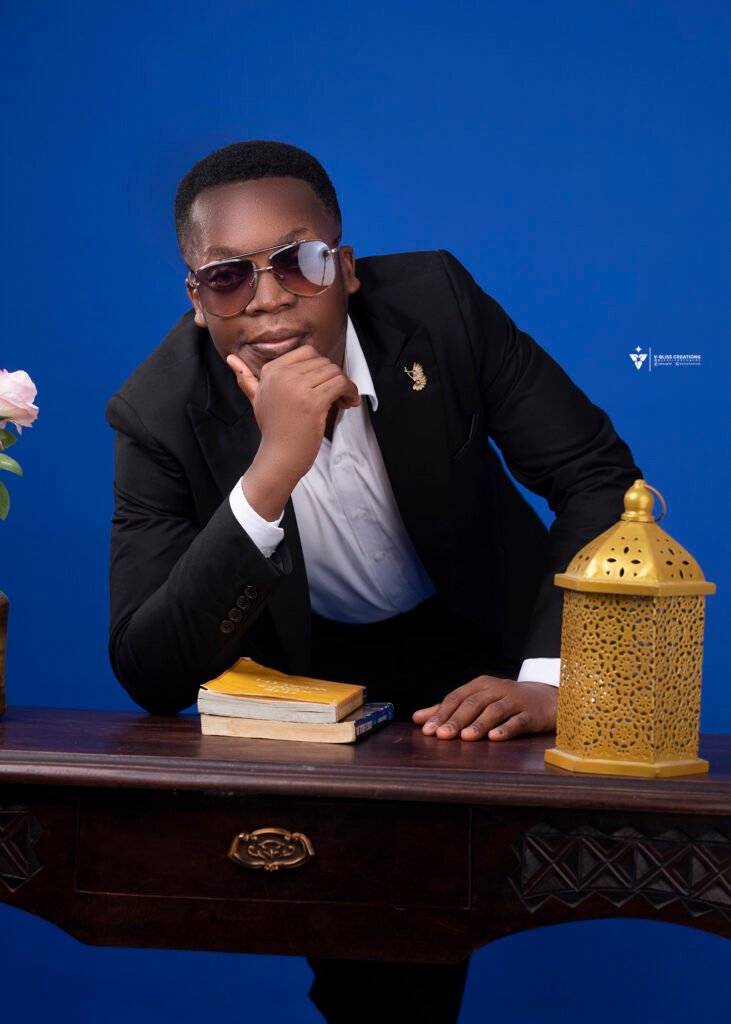
Ephraim Oracca-Tetteh
When I look back on my learning journey, I can divide it into three clear stages: the beginning, the struggle, and the transformation.
The beginning was filled with effort and hope. I worked hard, but my results didn’t always reflect how much I studied. They were good, yes, but not outstanding. The real change came later, after I learned how to learn.
My Early Academic Journey
Stage One: The Basic Education Certificate Examination (BECE)
In Ghana, the Basic Education Certificate Examination (BECE) is the national exam taken by students at the end of Junior High School. It determines whether you can move on to Senior High School.
Here were my BECE results:
| Subject | Grade |
| English Language | 3 |
| Social Studies | 2 |
| Religious & Moral Education (R.M.E) | 2 |
| Mathematics | 3 |
| Integrated Science | 2 |
| ICT | 2 |
| French | 5 |
| Ga | 3 |
| BDT/Pre-Technical Skills | 3 |
They were respectable results. It got me into my second-choice school. But deep down, I knew I had not yet reached my full potential.
Stage Two: The WASSCE
The West African Senior School Certificate Examination (WASSCE) is the exam students write at the end of Senior High School. It opens the door to university education across West Africa.
Here were my WASSCE results:
| Subject | Grade |
| Mathematics | C6 |
| English Language | B3 |
| Social Studies | B3 |
| Integrated Science | B3 |
| General Knowledge in Art (G.K.A) | A1 |
| Picture Making | B3 |
| Sculpture | B3 |
| Elective ICT | B3 |
I was proud, but not satisfied. I knew I had studied hard, yet I kept asking myself:
“Why am I not among the top students? What are they doing differently?”
I didn’t know it then, but the answer would later change everything.
Stage Three: The Transformation
When I entered the University of Ghana, my entire approach to learning changed.
I took 44 university courses, and I scored an A in every single one. I graduated with a Final GPA of 4.0. This meant that I graduated valedictorian and took home the Vice Chancellors Award for the Best Graduating Student.
People kept asking me, “How did you do it?”
My answer was simple:
“By the grace of God, I discovered how to learn effectively.”
The Truth About Good Students
Many of us believe that some people are just born smart. But intelligence is not fixed. it grows when you learn how to use your mind properly.
Anyone doing better than you academically isn’t necessarily more intelligent. They’ve simply found a smarter way to study.
Once you understand how learning works, your performance changes completely.
Active Learning vs. Passive Learning
Most of us were taught the passive way: read, reread, and hope it sticks. That’s like pouring water into a basket. it leaks out before you can use it. I use this basket analogy simply because I lack a better one that best explains that situation.
Active learning, on the other hand, is about taking charge of your mind.
You connect ideas, ask questions, visualize concepts, and use imagination to make lessons come alive.
You decide how to remember what you learn and that makes all the difference.
Three Learning Principles That Changed Everything
1. Linking Old Information to New Information
Every new thing you learn should connect to something you already know.
Our brains store information in networks, not in isolation.
When you link a new idea to an old one, you create a strong bridge that makes recall easy.
For instance, if you’re learning a new principle in law, relate it to a real-life situation or story you already understand.
That link turns something strange into something familiar and therefore memorable.
2. A Picture Is Worth a Thousand Words
Your imagination is your mind’s camera. When you turn words into pictures, your brain builds stronger memory paths.
If you’re learning about the human heart, don’t just memorize the chambers.
Picture it pumping like a fountain, pushing life through tiny tunnels. See it in color. Hear its rhythm.
That picture will stay long after words fade.
3. Imagination Belongs in the Classroom
When we were children, imagination was often seen as a distraction.
Teachers said, “Bring your minds here.”
But imagination isn’t your enemy. It’s your greatest learning tool.
Your brain remembers images, emotions, and movement far more easily than plain text.
If you believe imagination doesn’t belong in learning, you’ll keep forgetting what you study.
If you embrace it, your memory becomes limitless.
Let’s Try It Together
Let’s learn five countries and their capitals.
If you already know something about the country, use that.
If not, make the name sound like something familiar. The sillier or funnier the picture, the better you’ll remember it.
1. Ecuador – Quito
To easily remember this, think of Ecuador as the Equator. They sound alike.
Now imagine standing on the Equator, where the sun shines hot on your skin. Suddenly a mosquito bites your arm, and you flick it away. Feel the pain.
You laugh and say, “Even the mosquitoes know I’m in Ecuador!”
Now you’ll never forget. Ecuador = Equator, Quito = Mosquito.
2. Venezuela – Caracas
Picture a footballer like Vinícius Júnior from Brazil (who reminds you of Venezuela) practicing karate kicks.
Each kick is powerful “Hi-yah!”
Vinicius = Venezuela, Karate — Caracas!
The movement and sound help your brain connect them easily.
(This example was given by a mentor during a discussion session, who is the founder Smart Life.)
3. Peru – Lima
Think of the popular Peruvian hair some ladies’ wear.
Now imagine a girl named Halima (Lima) wearing it proudly at an event. This one is even taller than her and someone mistakenly steps on it.
You’ll remember: Peruvian = Peru, Halima = Lima.
4. Romania – Bucharest
Picture a strong Roman soldier carrying a pile of heavy books after battle.
He finds a seat labeled “Book Rest” and sighs in relief.
That’s Bucharest, the capital.
Romania = Roman, Bucharest = Book Rest.
5. Afghanistan – Kabul
Now imagine the rocky mountains of Afghanistan. Suddenly, you hear a loud gunshot echo through the air – “KABOOM!”
The “gun” represents Afghanistan because of the “ghan” syllable that sounds like gun. And the sound “Kaboom” reminds you of Kabul.
That one sharp sound locks the capital in your memory.
Afghanistan = Gun, Kabul = Kaboom.
Trust Me when I say “It Works“
It may sound playful, but your brain loves humor, pictures, and exaggeration.
That’s how strong memory is built.
Children remember cartoons and songs for years because those things are fun and emotional.
Learning can work the same way when you make it alive. Lets try to recall what we just learnt.
- What is the capital of Ecuador?
- Which countries capital is Caracas?
- Which countries capital is Afghanistan?
- What is the capital of Romania?
- What is the capital of Peru?
Five Tips to Make What You Imagine Stick Even Better
- Make it bigger. See it large in your mind.
- Multiply it. Picture many of it together.
- Make it funny or strange. The sillier, the better.
- Add movement. Your brain remembers motion better than stillness.
- Use your senses. See it, hear it, feel it, smell it, taste it if you can.
These five tricks turn boring facts into memories that last.
Practice Makes Permanent
The more you practice, the easier it becomes.
Try these methods when learning the names of countries, historical dates, vocabulary, or even science terms.
You’ll notice that remembering stops feeling like a struggle.
Your brain becomes sharper, faster, and more confident.
The Final Word
Your academic ability isn’t fixed. It grows when you learn how to learn.
I’m proof of that. Once I discovered these methods, my results transformed completely.
If you’re struggling today, don’t feel discouraged. You are not slow or behind. You just haven’t found your way yet.
Start today. Learn actively. Use your imagination. Make connections.
And one day, you’ll look back and realize the secret to success was inside you all along.
Have Questions for Me?
If you’d like to understand more about active learning or memory improvement, reach out.
I’d love to hear your story and help you find your best way to learn.
Ephraim Oracca-Tetteh
Valedictorian, Class of 2024
University of Ghana
Thank you so much Valedictorian, this is really inspiring to get me back on my feet that I can also make it as you. You have given me the hope that I can do better so I am ready to learn your techniques please.
This was very helpful. Thank you for sharing.
Another wonderful piece.
Lots of stuff to unlearn and learn, ready to accept the challenge – connecting concepts into real-life scenes with a taste of humor👍
And once again, thank you, Mr. Ephraim 🤗