
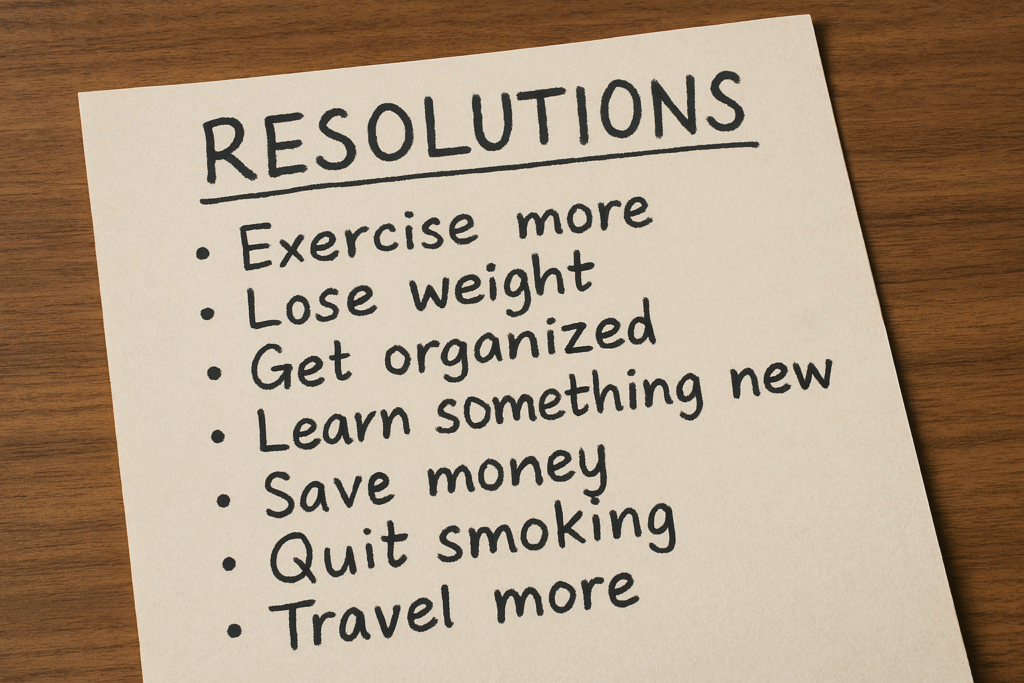
A new year creates a natural pause. Life slows just enough for reflection, and reflection gives room for intention. This is why New Year resolutions still matter, despite how often they are dismissed. The problem is not the resolution itself. The problem is how loosely it is held in memory.
When goals are vague, they fade. When they are anchored to clear images and familiar places, they stay alive.
This post explains what a resolution truly is, why it matters, and how memory techniques can help you return to it every single month.
What a Resolution Really Is
A resolution is not a wish, and it is not a promise made under emotional pressure.
A resolution is a clear decision about direction. It answers one simple question:
What do I intend to move toward this year, and what am I willing to organize my life around?
Good resolutions are deliberate. They are chosen, not inherited from social pressure or trends. They describe movement, not perfection.
Why Having a Resolution Matters
Without a resolution, life defaults to reaction. Days get filled, weeks disappear, and effort goes somewhere without being examined.
Socrates says it better when he said “An unexamined life is not worth living.”
A resolution does three important things:
- It gives your attention a filter.
- It allows you to say no with less guilt.
- It gives you a standard for review, not judgment.
A year without reflection feels fast but hollow. A year with reflection feels slower and more meaningful, even when it is difficult.
Five Areas of Life That Deserve Intentional Focus
While every life is different, most meaningful resolutions fall into five broad areas:
- Health and Energy
Physical strength, rest, habits, and mental clarity. - Work and Skill
Career growth, learning, contribution, and mastery. - Relationships
Family, friendships, marriage, community, and presence. - Finances and Stability
Income, saving, generosity, and long-term security. - Meaning and Inner Life
Faith, purpose, values, and personal alignment.
Not every area needs the same intensity each year. The goal is balance over time, not constant pressure.
Turning Goals Into Clear Mental Images
Memory works best with images, not abstract words.
Instead of writing, “I want to be healthier,” form a scene in your mind. See yourself waking up rested. Picture your clothes fitting differently. Imagine walking without fatigue.
Each resolution should become a short mental story. It should be visible, specific, and emotionally neutral. Not dramatic. Just clear.
If you cannot picture it, your brain will not revisit it easily.
Assigning Each Goal to a Familiar Location
This is where memory techniques become powerful.
Choose real locations you already know well. These can be rooms in your house, places on your daily route, or landmarks from childhood.
Assign one goal to one location.
For example:
- Health might belong in your favourite gym, football park, compound or living room.
- Work goals should be placed at your office.
- Relationships could be placed in your bedroom.
- Financial goals might be placed at your bank.
- Meaning and reflection could belong to a quiet corner, serene sea side or place of prayer.
When goals are placed in space, they stop floating. They become easier to return to. You can always revisit them anytime and anywhere.
Monthly Review Using Mental Locations
At the end of each month, take ten quiet minutes.
Mentally walk through each location. Pause at every place and ask one question only:
Did I do what was necessary this month to move this goal forward?
This is not a moment for shame or praise. It is simply observation.
If progress was made, note it.
If progress stalled, adjust the next month slightly.
This practice turns a New Year resolution into a living system, not a forgotten list.
A Personal Note
I started using this system about two years ago. I worked with twelve goals and made them actual things I can see in my mind’s eye and at specific locations. At the end of every month, I walk through them mentally, one by one. It gave me the chance to assess myself and push forward in attaining these goals. This simple habit has done more for consistency than motivation ever could.
Memory is not just for learning facts. It is a tool for directing your life.
When goals are remembered clearly and revisited gently, change becomes quieter, steadier, and far more durable.
Grab your copy of my ebook Imaginative learning for A+ Performance.
Memory Coach.